Does Laser Hair Removal Hurt? Here Is the Honest Truth
Book Into our Symetrie Studio Spa
Ready to take the next step? Book a consultation with a qualified permanent makeup artist.
Book Now
Pain Levels by Treatment Area
Where you treat matters just as much as how you treat it. Here is a breakdown by body part.
Face (Upper Lip, Chin, and Jawline)
The face has thin skin and dense nerve endings. This area often feels sharper than others. Sessions here are also short, usually just a few minutes. That keeps the total discomfort low.
Underarms
Underarm skin is thin and sensitive, and hair here tends to be thick. Most clients describe it as a quick series of snaps, not a constant sting.
Bikini and Brazilian Area
This is one of the more sensitive zones. Thin skin and dense hair are the reasons why. It is still manageable for most clients, especially with numbing cream and a skilled technician.
Legs
The legs are one of the easiest areas to treat. Skin here is thicker. The surface area is large, so the laser moves quickly across it.
Arms
Similar to legs, arms are generally low on the discomfort scale. Forearms tend to feel milder than the more sensitive underarm area nearby.
Chest and Abdomen
These areas sit in the middle of the scale. Skin thickness varies by person. Areas closer to the ribs can feel more sensitive than the chest's center.
Back and Shoulders
Thicker skin here usually means a milder sensation. The shoulder blades and spine can still feel sharper. There is less padding over the bone in those spots.
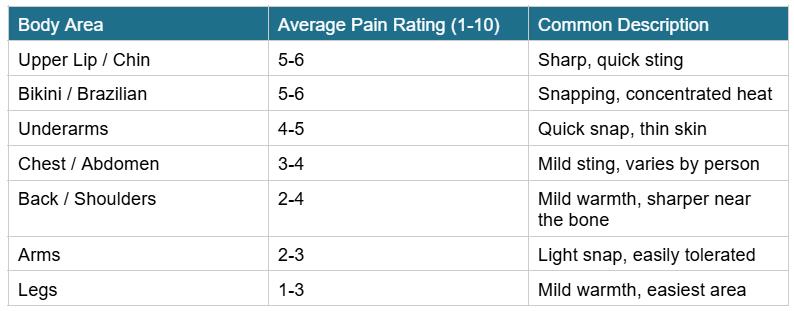
Pain Scale Comparison by Body Area
Here is how our clients typically rate each area. This is based on patient-reported feedback during sessions at Symetrie Studio Spa.
How to Prepare for a More Comfortable Session
Shaving Before Your Appointment
Shave the treatment area 12 to 24 hours before your session. This removes surface hair. The laser energy then goes straight to the follicle. That step reduces both discomfort and the risk of irritation.
Avoiding Sun Exposure
Sunburned or freshly tanned skin is more sensitive. It also reacts more to laser energy. Avoid direct sun and tanning beds for at least two weeks before your appointment. That keeps the session comfortable and safe.
Medications to Discuss With Your Provider
Certain medications can increase skin sensitivity to light. This includes some acne treatments and antibiotics. Always tell your provider about your medications before your session. They can adjust your treatment plan.
Staying Hydrated
Well-hydrated skin tends to tolerate laser energy better than dry, tight skin. Drink water in the days before your appointment. Moisturize the treatment area the night before.
Patch Testing
A quick patch test confirms the right setting for your skin. Your technician does this before treating the full area. This one step catches most comfort issues early.
Using Topical Numbing Creams
A topical numbing cream can meaningfully soften the sensation. Apply it 30 to 45 minutes before your session. This helps most in sensitive areas like the upper lip or bikini line. The FDA recommends discussing numbing cream with a medical professional first. Overuse of strong topical anesthetics carries its own risks (Source: FDA drug safety communication on topical anesthetics).
Does Pain Decrease Over Multiple Sessions?
Why Hair Becomes Easier to Treat
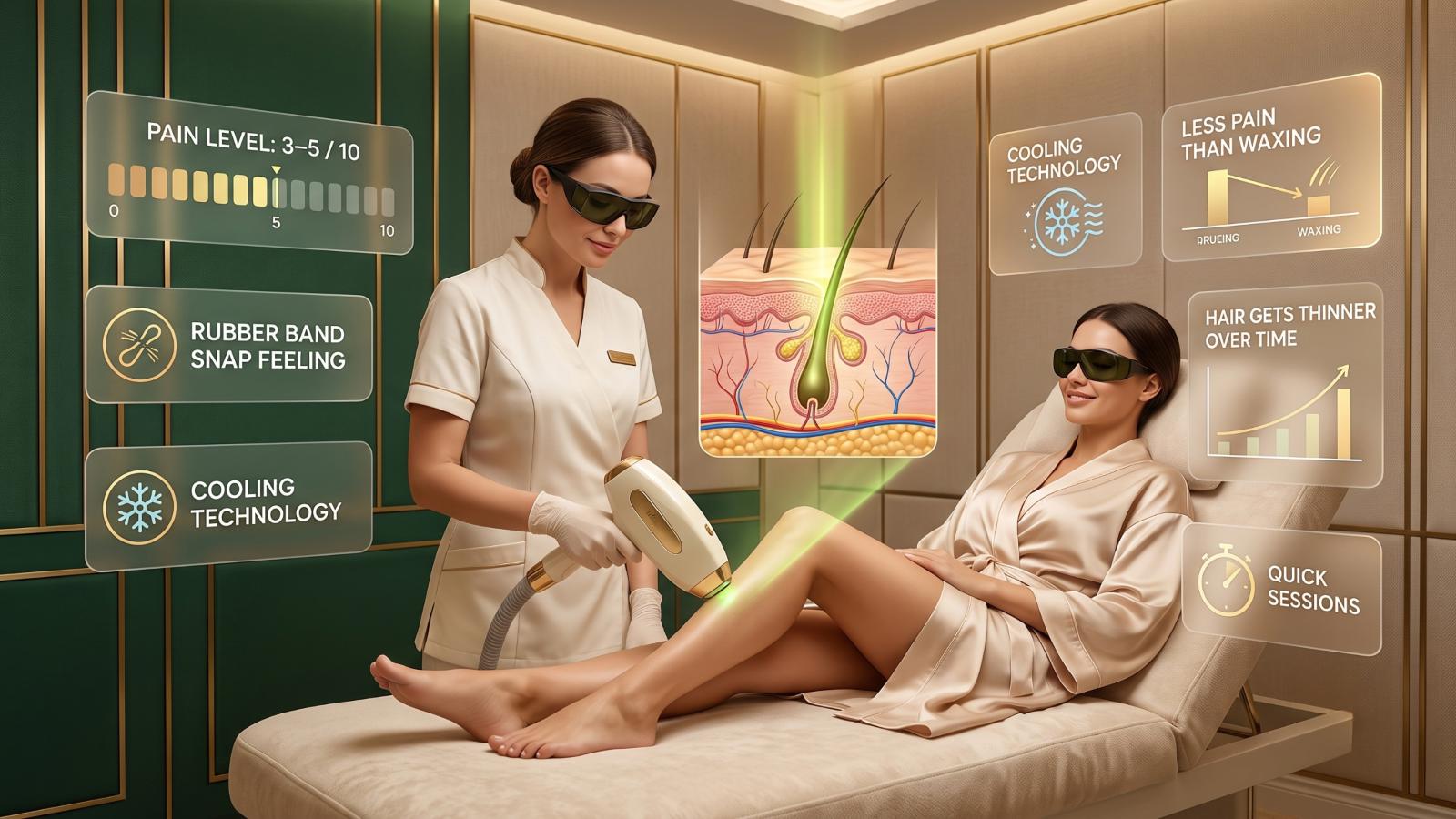
Hair grows in cycles. Laser treatment only works on hair that is actively growing at that time. Each round of treatment reduces the number of active follicles. That means thinner, sparser hair over time.
Thinner hair contains less melanin overall. It absorbs less laser energy per pulse. Less energy generally means less sensation.
Can It Eventually Feel Painless?
Many long-term clients describe later sessions as barely noticeable. It often feels more like warmth than a sting. Full painlessness is not guaranteed for everyone. A significant drop in discomfort is one of the most common things we hear.
Book Into our Symetrie Studio Spa
Ready to take the next step? Book a consultation with a qualified permanent makeup artist.
Book Now
Book Into our Symetrie Studio Spa
Ready to take the next step? Book a consultation with a qualified permanent makeup artist.
Book Now